
A snapshot of anti-discrimination legal protections on the basis of SOGIESC in Asia
For generations, LGBTIQ activists and advocates across Asia have resisted invisibilisation under the law, and have advocated for equality and protection from discrimination. Their advocacy has been a crucial part of legal and political reform processes across the region, and their impacts are tangible: many countries in Asia have legislated and continue to legislate equal recognition and protection on the basis of sexual orientation, gender identity and expression, and sexual characteristics (SOGIESC).
This IDAHOBIT, we spotlight progressive and inclusive legal provisions across Asia which protect LGBTIQ individuals and communities against hate and discrimination.
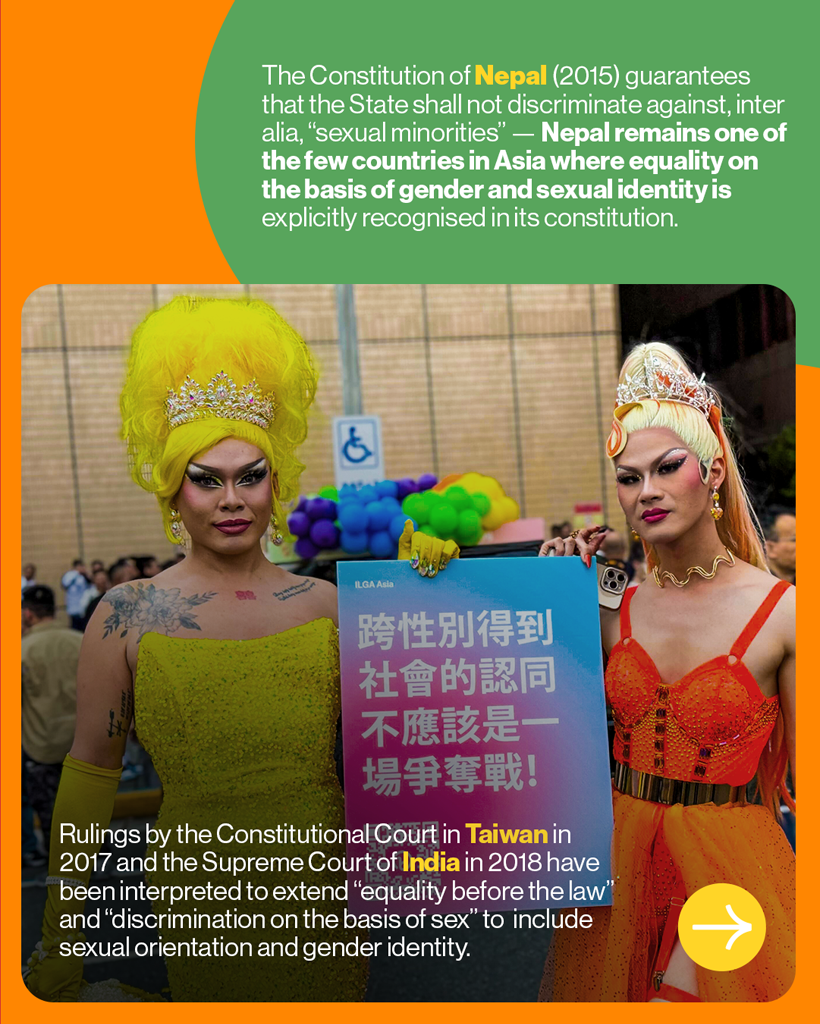
The Constitution of Nepal (2015) guarantees that the State shall not discriminate against, inter alia, “sexual minorities” — Nepal remains one of the few countries in Asia where equality on the basis of gender and sexual identity is explicitly recognised in its constitution.
Rulings by the Constitutional Court in Taiwan in 2017 and the Supreme Court of India in 2018 have been interpreted to extend “equality before the law” and “discrimination on the basis of sex” to include sexual orientation and gender identity.
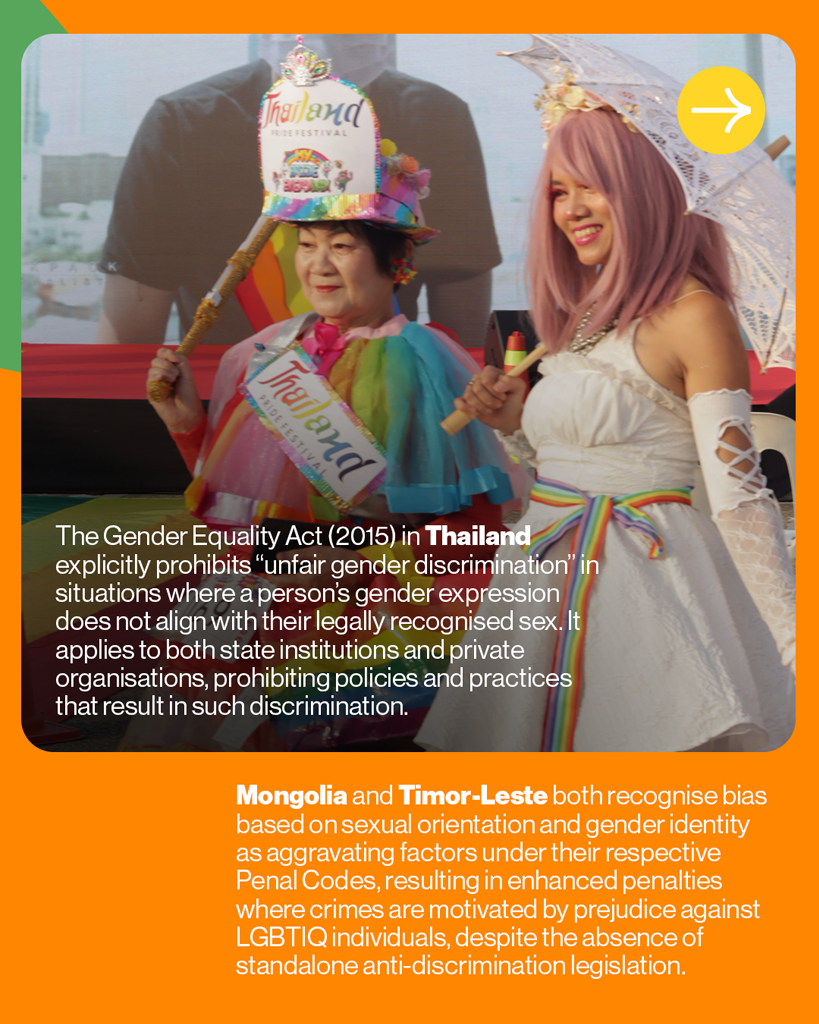
The Gender Equality Act (2015) in Thailand explicitly prohibits “unfair gender discrimination” in situations where a person’s gender expression does not align with their legally recognised sex. It applies to both state institutions and private organisations, prohibiting policies and practices that result in such discrimination.
Mongolia and Timor-Leste both recognise bias based on sexual orientation and gender identity as aggravating factors under their respective Penal Codes, resulting in enhanced penalties where crimes are motivated by prejudice against LGBTIQ individuals, despite the absence of standalone anti-discrimination legislation.
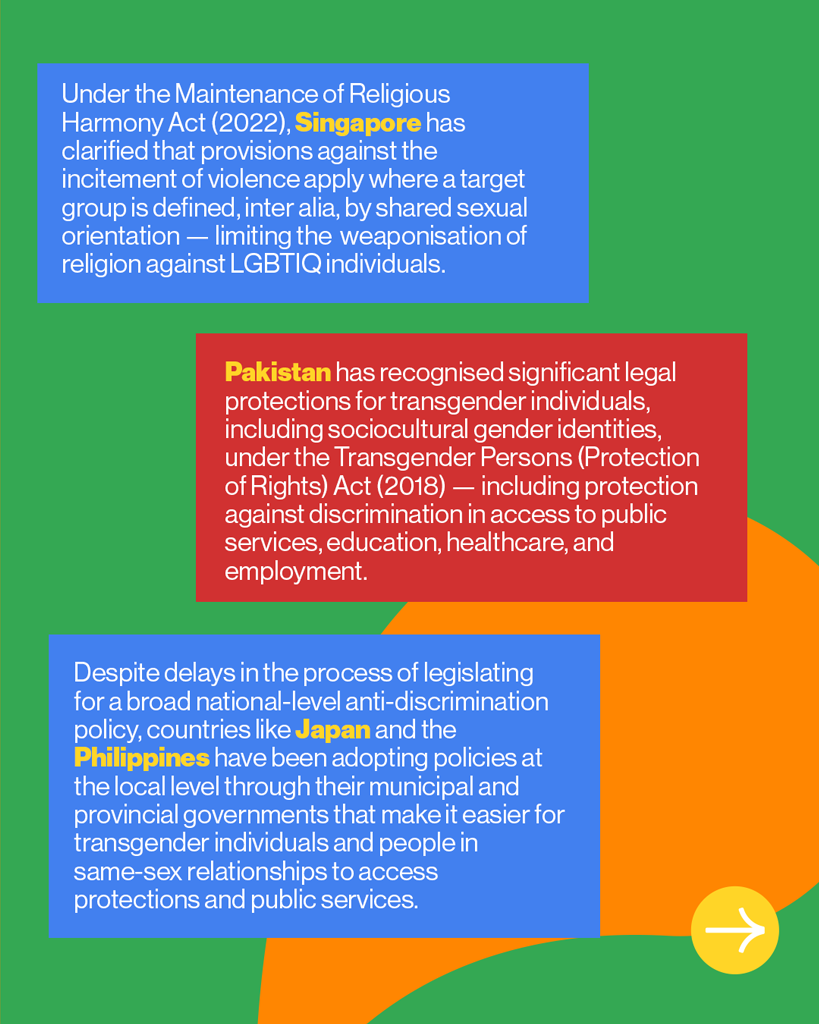
Under the Maintenance of Religious Harmony Act (2022), Singapore has clarified that provisions against the incitement of violence apply where a target group is defined, inter alia, by shared sexual orientation — limiting the weaponisation of religion against LGBTIQ individuals.
Pakistan has recognised significant legal protections for transgender individuals, including sociocultural gender identities, under the Transgender Persons (Protection of Rights) Act (2018) — including protection against discrimination in access to public services, education, healthcare, and employment.
Despite delays in the process of legislating for a broad national-level anti-discrimination policy, countries like Japan and the Philippines have been adopting policies at the local level through their municipal and provincial governments that make it easier for transgender individuals and people in same-sex relationships to access protections and public services.
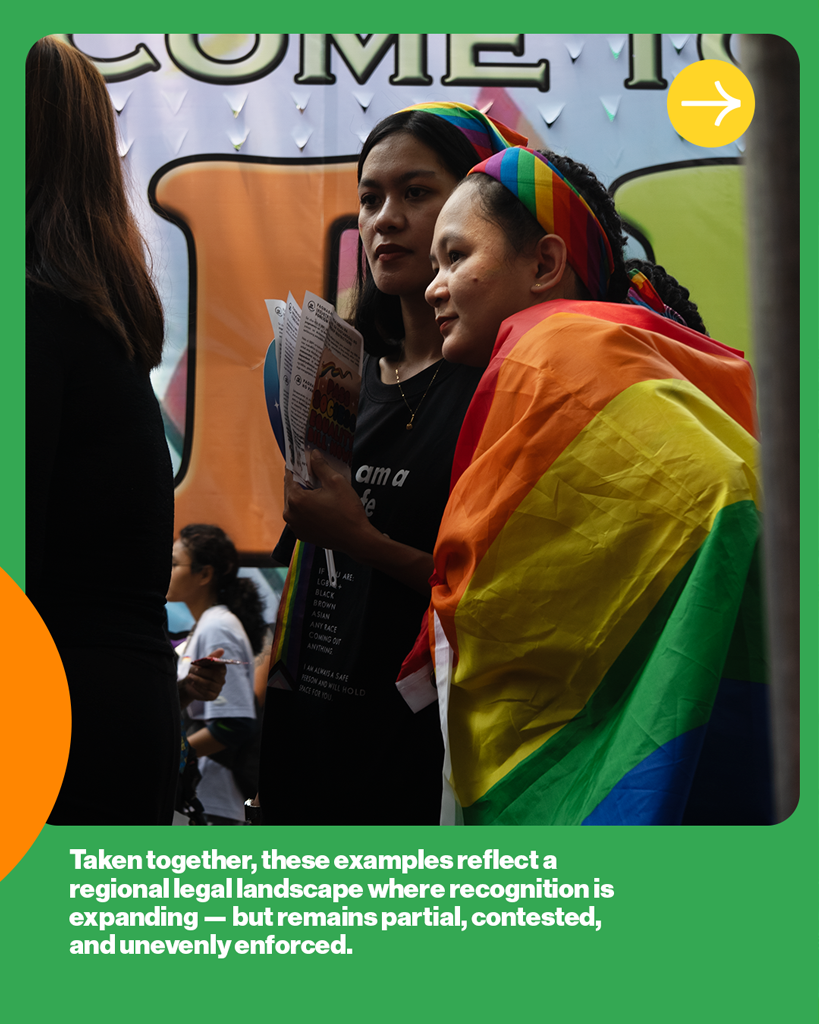
Taken together, these examples reflect a regional legal landscape where recognition is expanding — but remains partial, contested, and unevenly enforced.
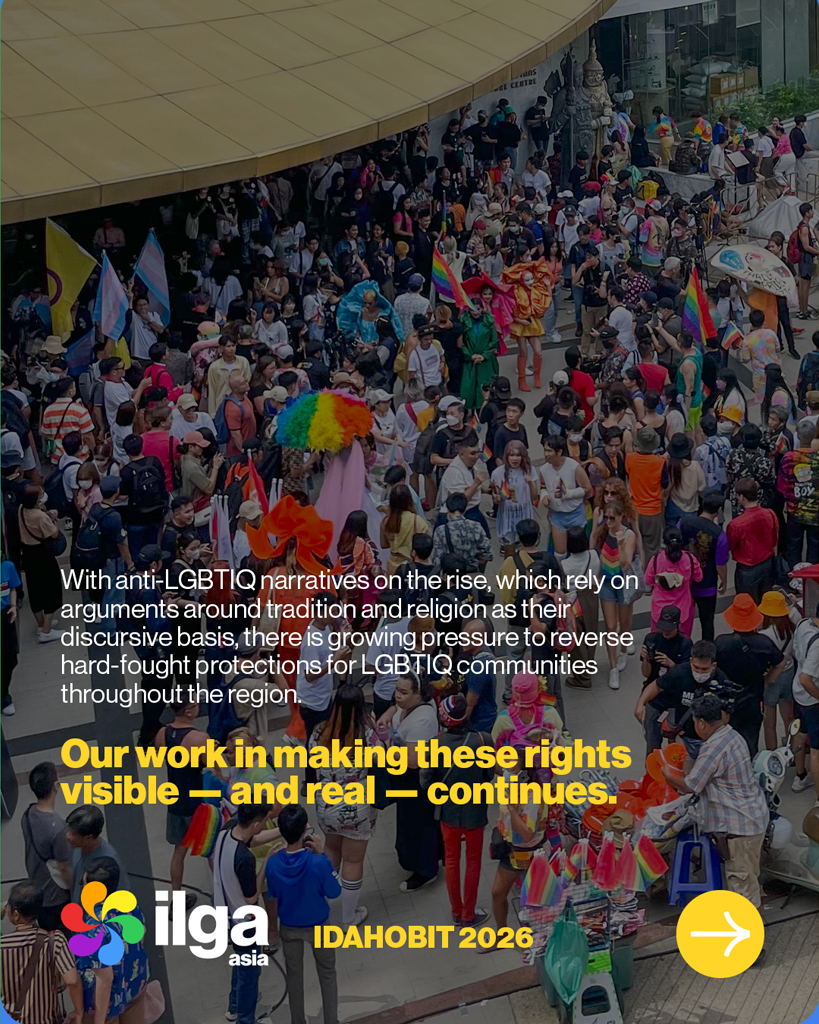
With anti-LGBTIQ narratives on the rise, which rely on arguments around tradition and religion as their discursive basis, there is growing pressure to reverse hard-fought protections for LGBTIQ communities throughout the region.
Our work in making these rights visible — and real — continues.
Happy IDAHOBIT 2026!
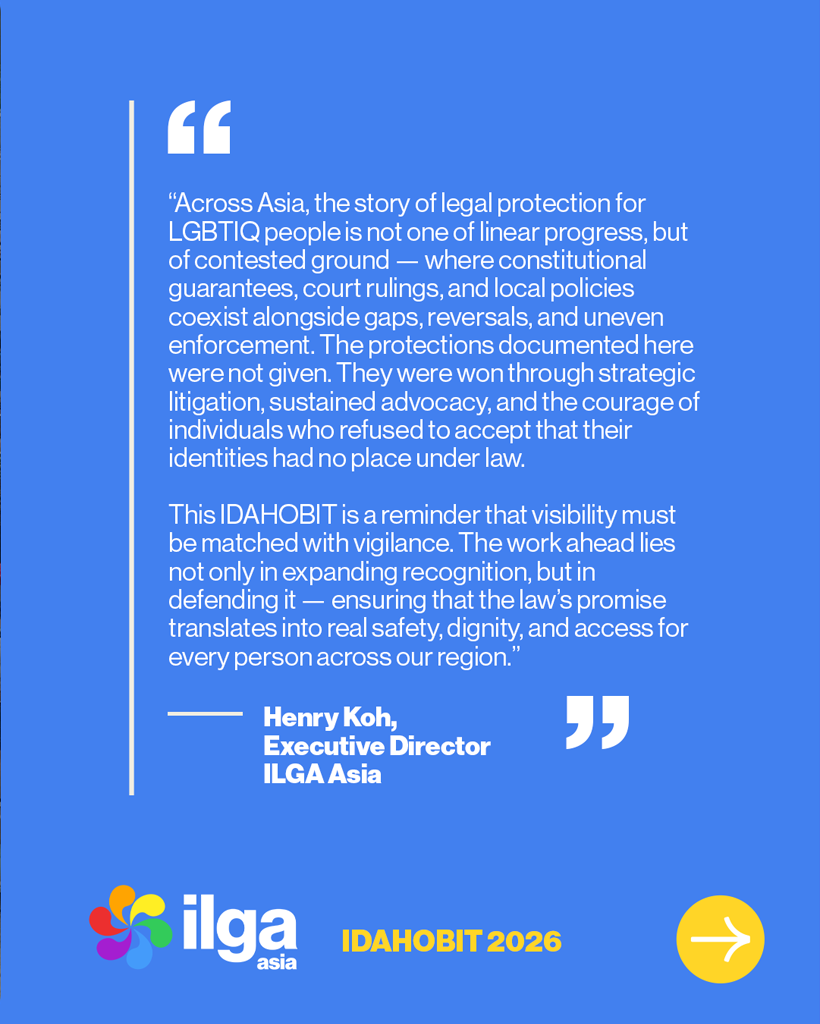
“Across Asia, the story of legal protection for LGBTIQ people is not one of linear progress, but of contested ground — where constitutional guarantees, court rulings, and local policies coexist alongside gaps, reversals, and uneven enforcement. The protections documented here were not given. They were won through strategic litigation, sustained advocacy, and the courage of individuals who refused to accept that their identities had no place under law.
This IDAHOBIT is a reminder that visibility must be matched with vigilance. The work ahead lies not only in expanding recognition, but in defending it — ensuring that the law’s promise translates into real safety, dignity, and access for every person across our region.”
