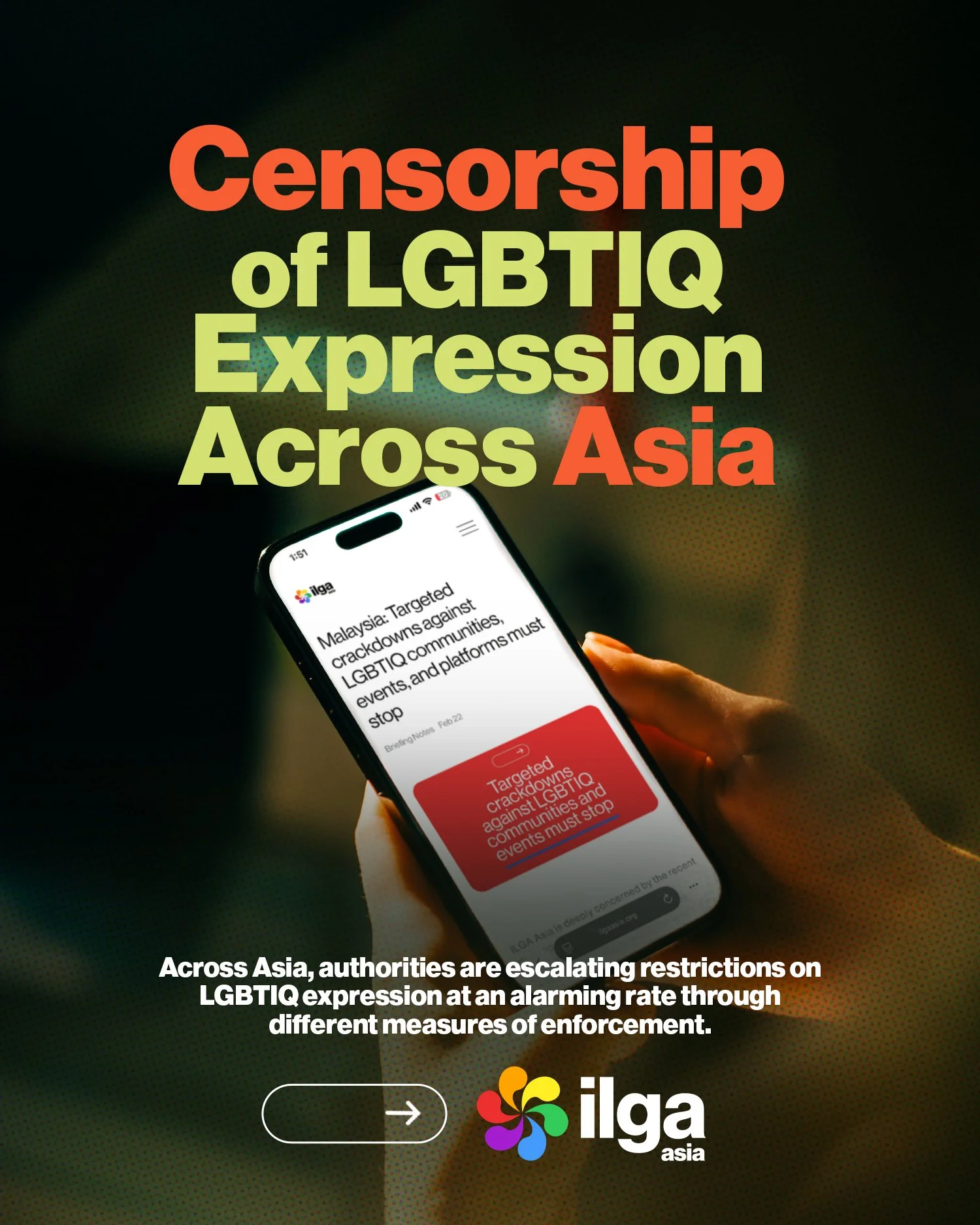
Censorship of LGBTIQ Expression Across Asia
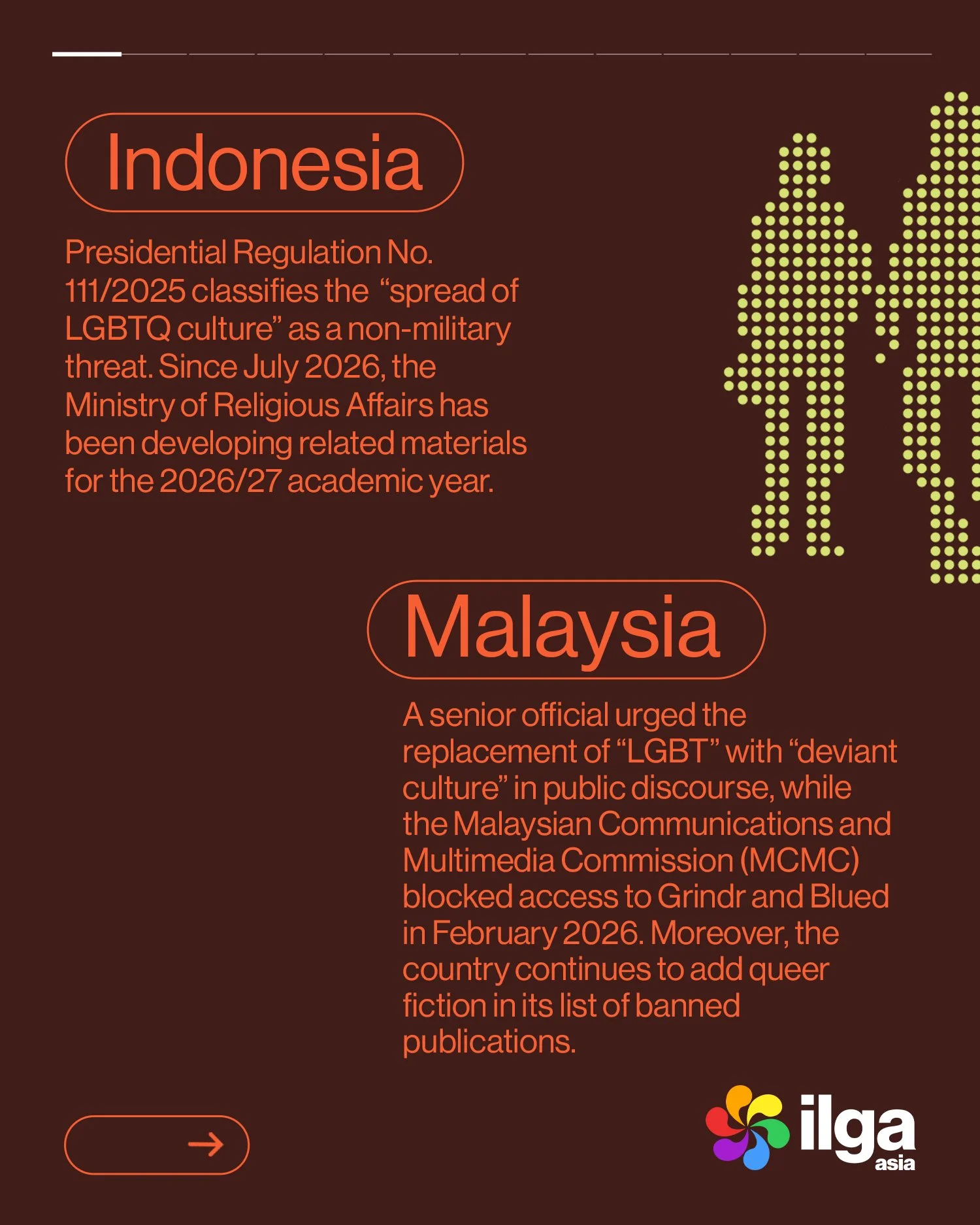
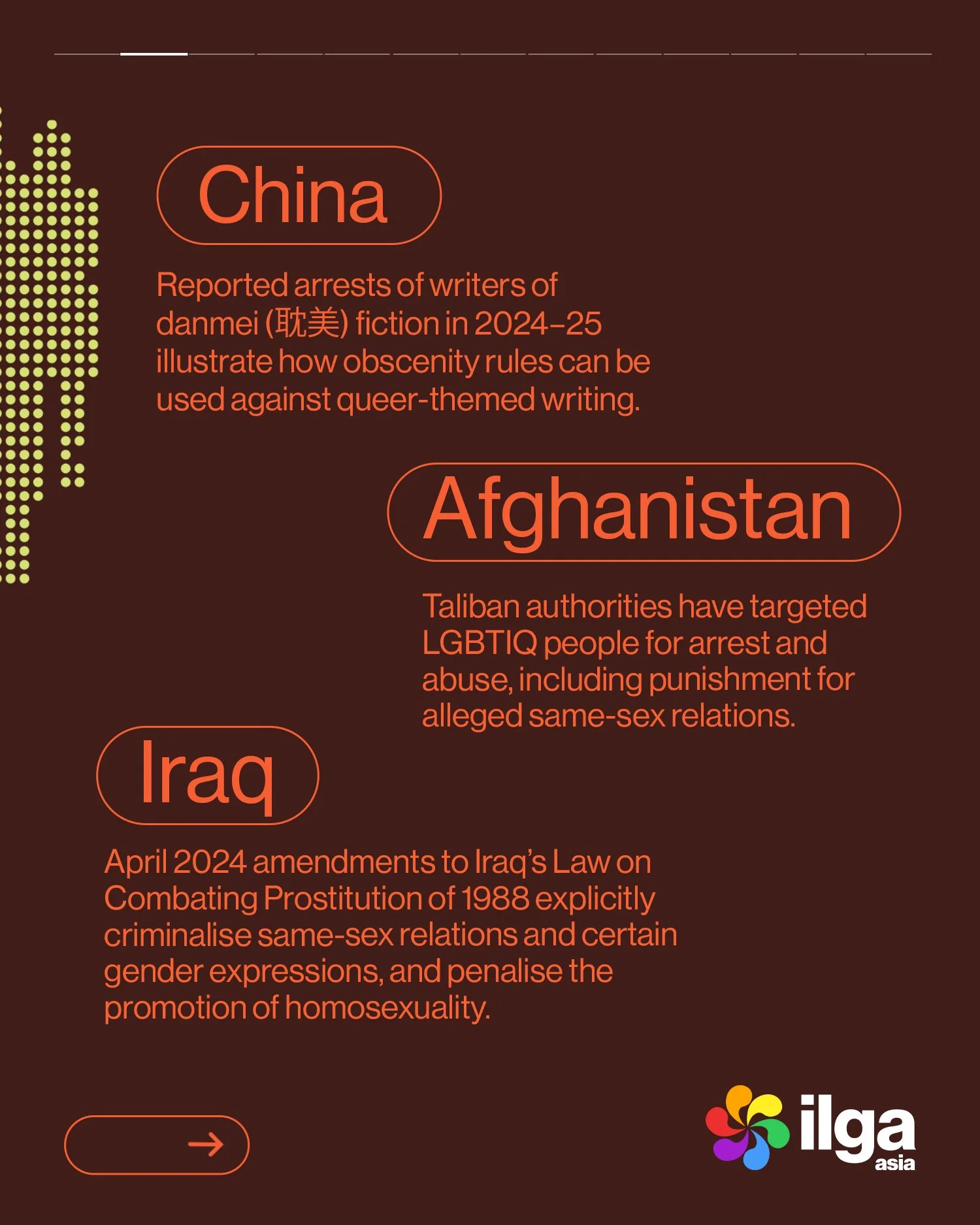
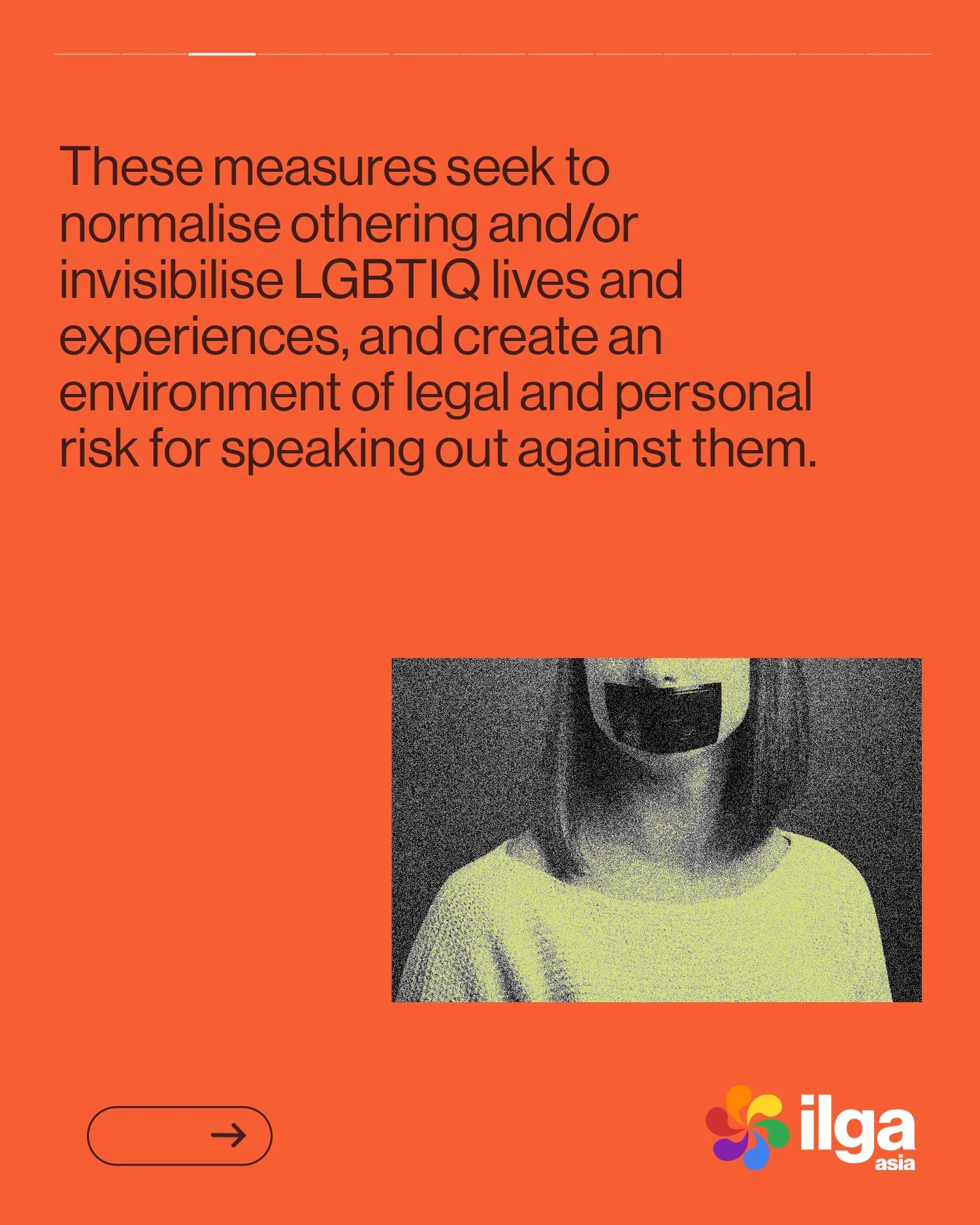
Across Asia, authorities are escalating restrictions on LGBTIQ expression at an alarming rate through different measures of enforcement. In Indonesia, Presidential Regulation No. 111/2025 classifies the “spread of LGBTQ culture” as a non-military threat. Since July 2026, the Ministry of Religious Affairs has been developing related materials for the 2026/27 academic year. In Malaysia, a senior official urged the replacement of “LGBT” with “deviant culture” in public discourse, while the Malaysian Communications and Multimedia Commission (MCMC) blocked access to Grindr and Blued in February 2026. Moreover, the country continues to add queer fiction in its list of banned publications. In China, reported arrests of writers of danmei (耽美) fiction in 2024–25 illustrate how obscenity rules can be used against queer-themed writing. In Afghanistan, Taliban authorities have targeted LGBTIQ people for arrest and abuse, including punishment for alleged same-sex relations. April 2024 amendments to Iraq’s Law on Combating Prostitution of 1988 explicitly criminalise same-sex relations and certain gender expressions, and penalise the promotion of homosexuality. These measures seek to normalise othering and/or invisibilise LGBTIQ lives and experiences, and create an environment of legal and personal risk for speaking out against them.
Censorship is not limited to an expressed prohibition on LGBTIQ content. Morality and obscenity offences, broadcasting rules, platform regulation and discretionary policing can restrict publication, assembly, health information and community organising. In South Korea, Pride organisers in Seoul were denied use of their traditional venue in 2024, although the parade eventually went ahead in public spaces without an official permit. A study by Justice for Sisters and Amnesty International Malaysia documented 13 bans on publications with LGBTIQ themes or content between 2020 and May 2025. Although the Kuala Lumpur High Court ruled that the raids on Swatch stores were unlawful, the ban on rainbow-themed “LGBT themed watches” remains in effect in Malaysia and sets a precedent against other rainbow or Pride themed merchandise. ILGA Asia and our members have also documented raids and digital blocking in Malaysia. While their legal bases and outcomes differ, such instances show how restrictions on content or access to space can narrow public participation and visibility. Vague standards further invite authorities or platforms to label accurate information and interpret basic rights to expression and assembly as harmful without demonstrating a concrete harm.
Criminalisation of adult consensual same-sex relationships intensifies that chilling effect. The ILGA World database monitors and documents the offences and penalties that remain in force across Asian jurisdictions. Where consensual same-sex conduct or gender expression is a punishable offence, self-censorship becomes a protection mechanism against arbitrary detention and ill-treatment, as these harms can exacerbate violations of basic human rights guarantees like privacy, equality, expression, and association. Criminal law can therefore suppress expression before any publication is banned or any platform is blocked or censored, and risk of exposure can deter people from speaking, seeking healthcare, documenting abuse, and organising safely.
Furthermore, states are introducing policies to regulate digital spaces and platform governance—some of which rely on ambiguously framed obscenity and morality restrictions to regulate expression and assembly across online platforms. Laws against anonymity and increased surveillance make these risks more acute.
Indonesia’s House of Representatives advanced a revised Broadcasting Bill as a House initiative in September 2026, and discussions with the government are to follow. The Bill’s proposed reach over digital spaces and media adopts an explicit ban on all queer content: Article 28(A) of the proposed Bill prohibits broadcasting institutions from broadcasting content displaying behaviour of lesbian, homosexual, bisexual, and transgender individuals; Article 46(A) prohibits using models that “promote LGBT behaviour” in advertisements and Article 50(B) regulates the Broadcasting Content Standards (SIS) by prohibiting broadcast of any content displaying “LGBT behaviour.” While the state relied on pornography laws for increased digital surveillance into suspected “deviant” and “LGBT behaviour” online, and a standard of “appropriateness” was implemented for regulating broadcast content, this explicit ban further shrinks digital spaces for LGBTIQ Indonesians to express themselves safely.
In Malaysia, the Cybercrime Bill 2026 has prompted concern over broad search, seizure, and data-access powers, and inadequate safeguards against the backdrop of restrictions on queer dating platforms. Furthermore, the proposed Bill allows officers to approach platforms for forced disclosure of user data without informing the user or obtaining a judicial warrant—lowering the threshold for investigation and putting LGBTIQ users at increased risk of surveillance and detention over their online behaviour without adequate information of the proceedings or judicial redress.
Nepal withdrew its highly contested Social Media Bill in February 2026 following nationwide protests, illustrating that contested digital restrictions can also be reversed. The now-revoked Bill had provisions against anonymity and criminal sanctions for content that went against morality and social harmony.
Iraq’s criminal prohibition on “promoting homosexuality” creates a direct risk for advocacy; ILGA Asia’s Iraq briefing in January 2025 also documented digital entrapment and exposure leading to violence.
“Censorship does not stop at the page or screen. When authorities portray LGBTIQ lives as harmful, people can lose the freedom to seek care, report abuse, or find one another safely. States have a duty to address genuine harm. They cannot manufacture harm out of our existence and call the result protection.” — Henry Koh, Executive Director, ILGA Asia
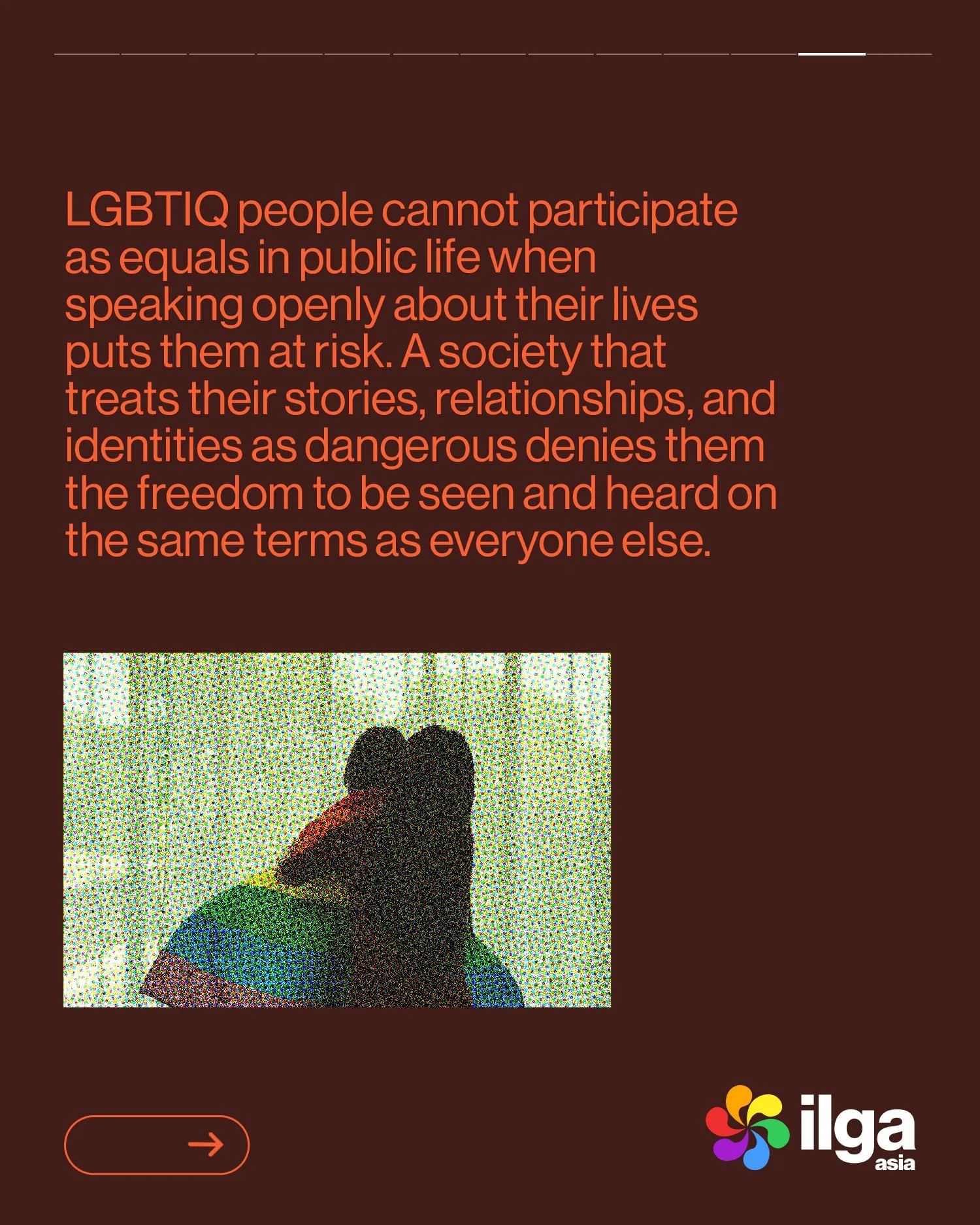
Restrictions on expression require a clear legal basis, a legitimate aim, necessity and proportionality; as they must also comply with equity and non-discrimination. In Fedotova v Russian Federation (2012), the UN Human Rights Committee rejected an ambiguous ban on “propaganda on homosexuality” that singled out same-sex orientation, finding that a general appeal to protecting minors did not justify the restriction. These principles are elaborated in General Comment No. 34 of the ICCPR. Governments should repeal laws criminalising consensual same-sex conduct and gender expressions, remove discriminatory content restrictions, and subject blocking, censorship, and user data requests on online platforms to the same human rights standards and judicial review as offline search and seizures. In parallel, digital platforms should publish clear content moderation standards, provide reasons and appeal mechanisms for removals, protect users from outing, doxxing, and harassment, and resist discriminatory demands. LGBTIQ people cannot participate as equals in public life when speaking openly about their lives puts them at risk. A society that treats their stories, relationships, and identities as dangerous denies them the freedom to be seen and heard on the same terms as everyone else.
Asia’s legal and political contexts vary widely, but recurring methods of exclusion have been documented across the region. Criminal penalties, ambiguous legal framings, discretionary decisions and digital controls compound the barriers to free expression that LGBTIQ people face. Spaces where LGBTIQ individuals and activists can express themselves are disappearing, making it harder for activists to document abuse and to challenge decisions that govern their lives. While each country’s circumstances and developments demand careful attention, the principle remains the same across our region — no one should have to choose between speaking truthfully and staying safe.