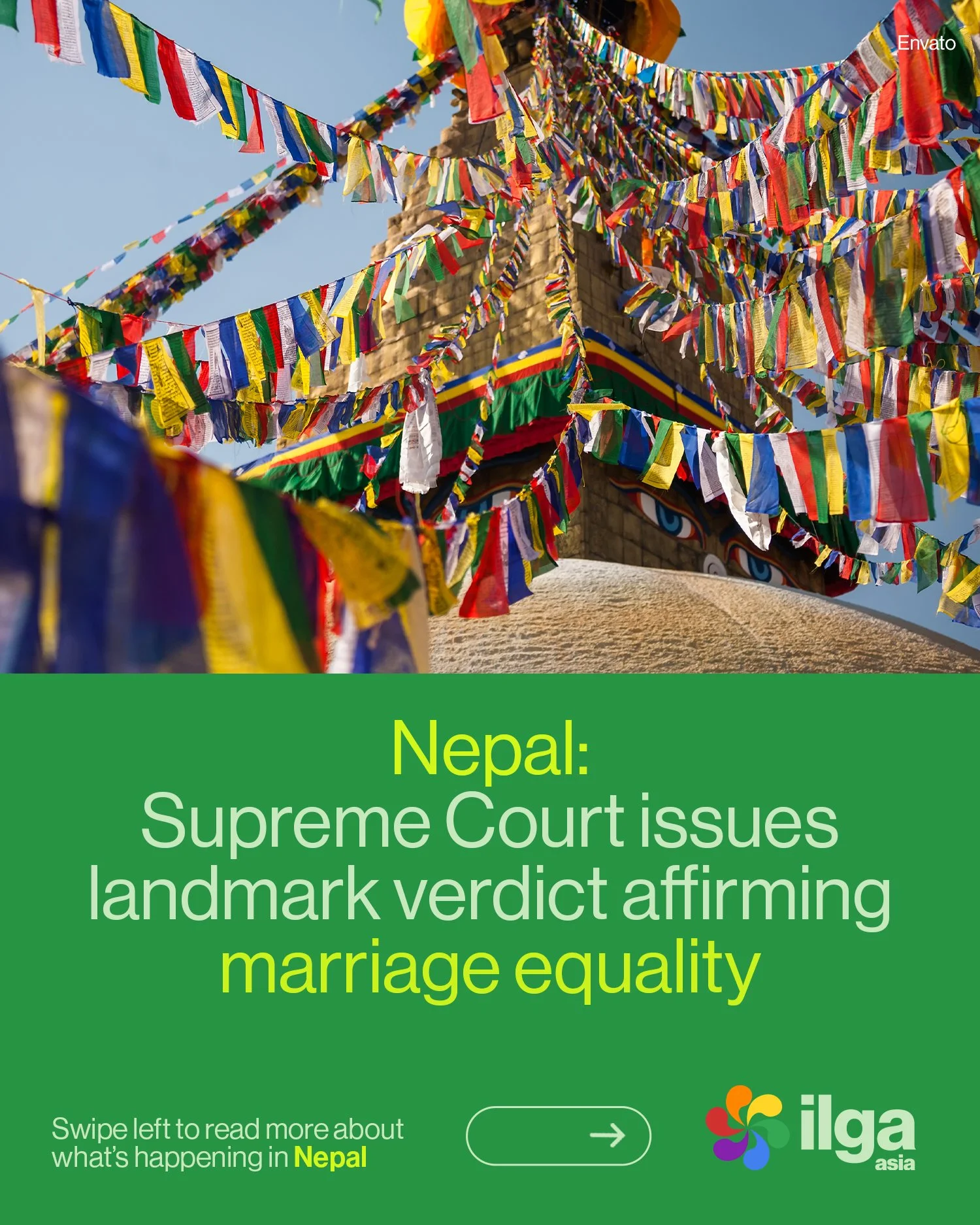
Nepal: Supreme Court issues landmark verdict affirming marriage equality
On 18 June 2026, the Supreme Court of Nepal gave the final verdict in the case of Pinky Gurung v. Government of Nepal ruling that the Government of Nepal must give full and equal marriage rights to same-sex couples. The decision urged executive and legislative bodies to take necessary policy and administrative measures for implementation. The Court had previously allowed same-sex couples to temporarily register their marriages through an interim order in 2023 but had fallen short of issuing equal marriage rights. This landmark judgement makes Nepal the first country in South Asia and the third in Asia to fully realise marriage equality and allow same sex couples to have the same rights, recognition, and legal legitimacy to their union.
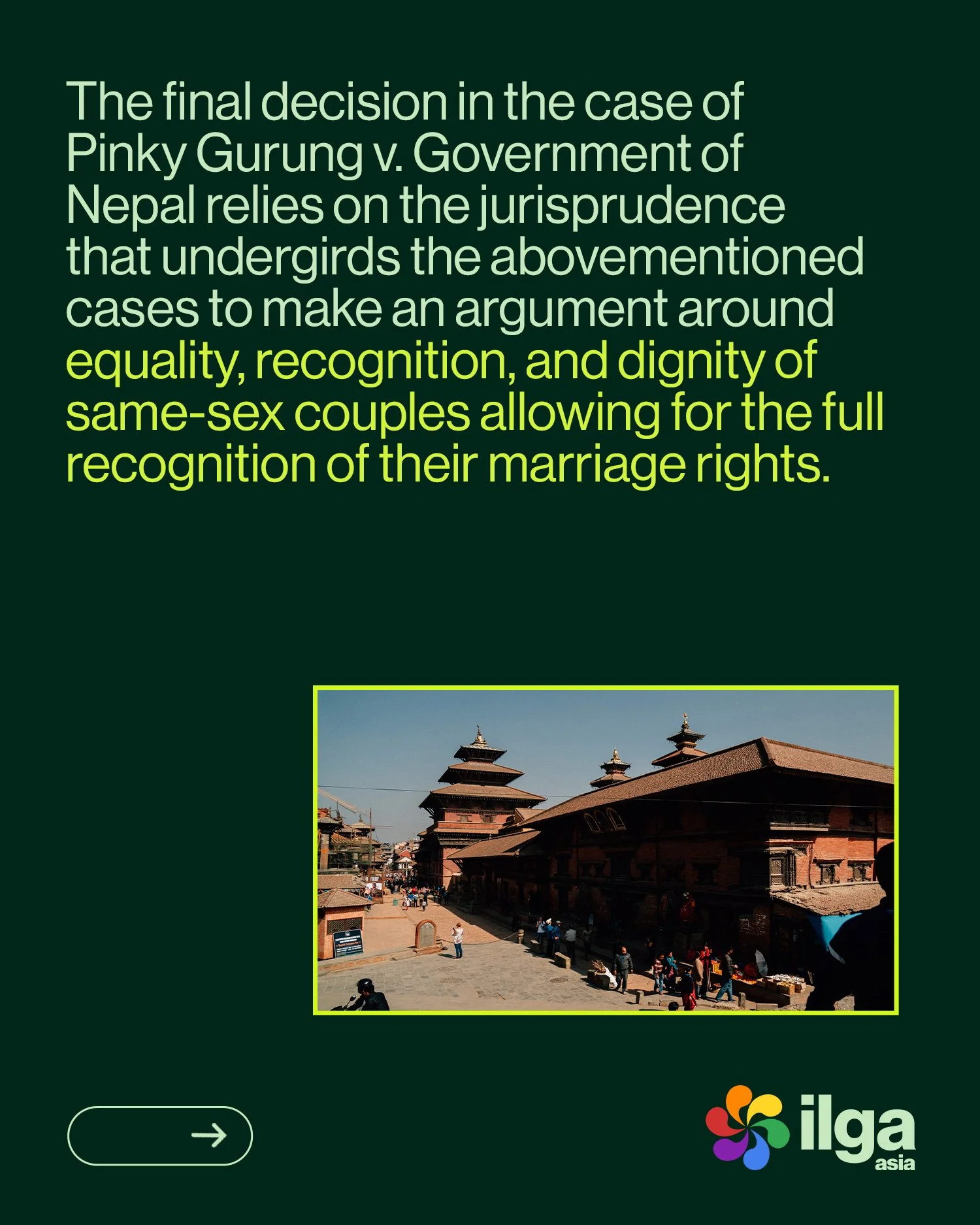
The judiciary of Nepal has been central in progressing the rights of the LGBTIQ communities and individuals in the country and Supreme Court of Nepal has been deliberating on the rights and recognition for same sex couples for decades. In 2008, in the case of Sunil Babu Pant v. Government of Nepal, the Supreme Court recognised gender and sexual minorities as a protected group and requested the government to implement protection measures. In 2013, the Court held in Rajani Shahi v. National Women Commission that the choice of one’s partner is a personal matter and the Court cannot prohibit same-sex couples from cohabitating and emphasised the need for legal protections for people with different sexual orientations. In 2017, the Court recognised a marriage between a lesbian couple that was registered outside of Nepal for immigration purposes in the case of Suman Pant v. Ministry of Home Affairs on the basis of equality and constitutional protection of gender and sexual minorities against discrimination. The final decision in the case of Pinky Gurung v. Government of Nepal relies on the jurisprudence that undergirds the abovementioned cases to make an argument around equality, recognition, and dignity of same-sex couples allowing for the full recognition of their marriage rights.
“As the lead petitioner on behalf of the team who filed the petition and LGBTIQA+ community, we welcome the Supreme Court judgement regarding marriage equality in Nepal. I think full implementation of the Court's decision is an important opportunity to strengthen the rule of law, uphold constitutional guarantees of equality and dignity, and reinforce respect for the independence of Nepal's judiciary. Ensuring that the Civil Code reflects these principles will help bring Nepal's laws in line with our Constitution and the country's longstanding commitment to human rights and inclusion.” — Pinky Gurung, Blue Diamond Society, lead petitioner in the marriage equality lawsuit.
Following the interim order in 2023, the Ministry of Home Affairs instructed local level administrations to register same-sex marriages in a separate record as temporary registrations; there have been a small but symbolically significant number of couples who had their unions recognised under this system, even if they lacked rights associated with marriage like property, inheritance, tax benefits, adoption, and medical decision-making. Lack of awareness and communication also led to people being turned away by their local administrations when seeking to temporarily register their marriage. This decision paves way for the government to create an inclusive system that encodes marriage equality across all relevant areas of law enabling same-sex couples to enjoy the same set of rights conferred to heterosexual couples. Full implementation of marriage equality could strengthen these protections by securing access to inheritance, tax benefits, spousal visas, and family rights that remain central to social life, economic security, and overall wellbeing for LGBTIQ individuals and communities.
The decision builds on the commitment from the Government of Nepal to protect and uplift gender and sexual minorities who have been at the margins, even as the spaces for LGBTIQ recognition and advocacy are shrinking across the region. Recognition of marriage allows LGBTIQ individuals and communities to secure shared property, raise children, make medical decisions for each other, and participate in the society equally and in an open and dignified manner. ILGA Asia welcomes this landmark decision from the Supreme Court of Nepal and we look forward to the comprehensive amendments to the existing Civil Code and related laws to reflect the new constitutional standard of equal marriage at national and local levels.