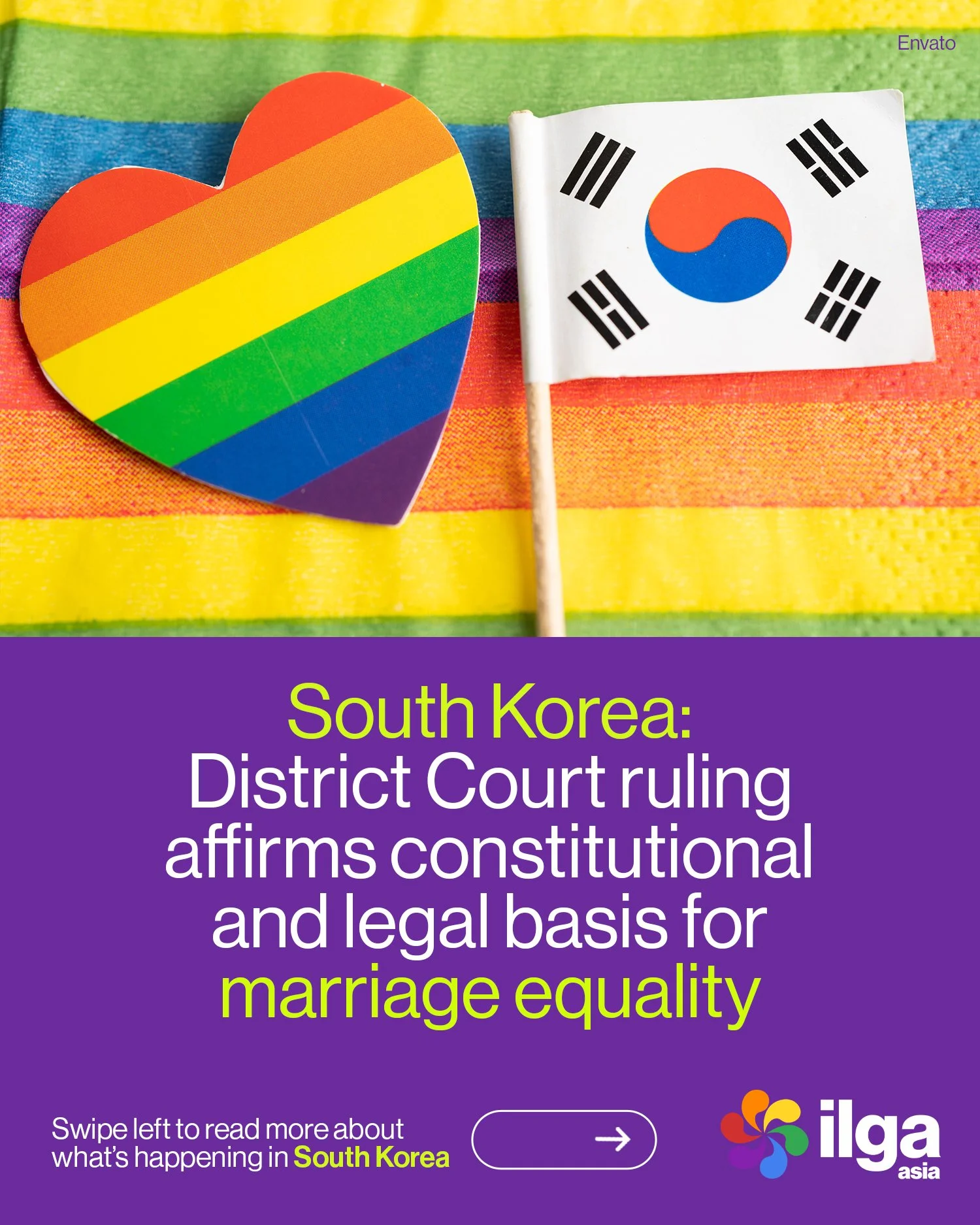
South Korea: District Court ruling affirms constitutional and legal basis for marriage equality
On 5 June 2026, the Seoul Central District Court ruled that a domestic partnership between a same-sex couple can be considered as a “de facto marriage” and may constitute a legally protectable interest, and found a third party liable for tort damages arising from the breakdown of the relationship. While the Court concluded that the couple’s relationship—based on their shared economic partnership and social convention—could amount to more than a simple cohabitation relationship and be classified as a de facto marriage, the judgement refused to expand on whether to recognise a legal union and/or common-law marriage for same-sex couples.
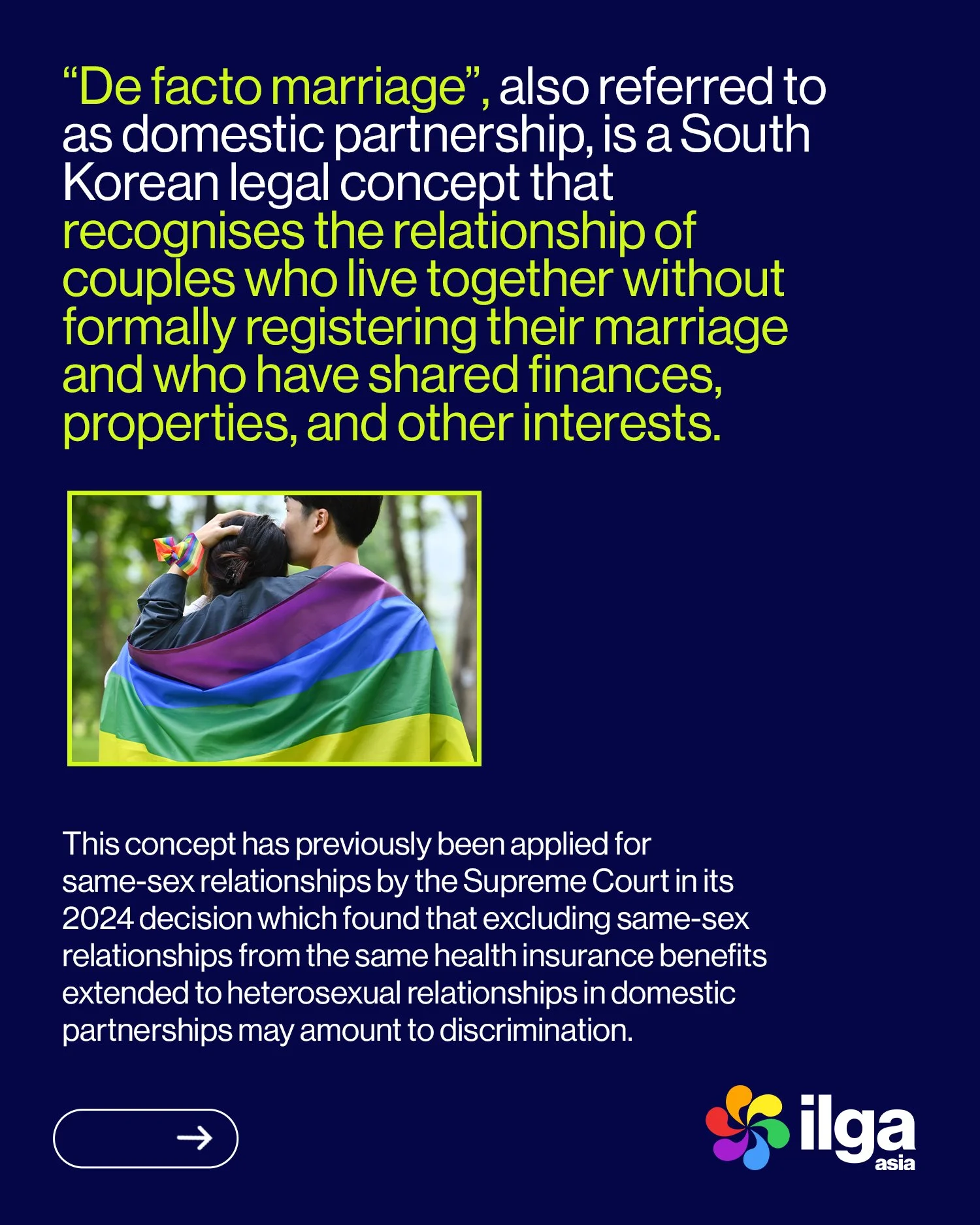
“De facto marriage”, also referred to as domestic partnership, is a South Korean legal concept that recognises the relationship of couples who live together without formally registering their marriage and who have shared finances, properties, and other interests. This concept has previously been applied for same-sex relationships by the Supreme Court in its 2024 decision which found that excluding same-sex relationships from the same health insurance benefits extended to heterosexual relationships in domestic partnerships may amount to discrimination. While the Seoul Central District Court distinguished the legal questions of “whether to recognise a legal or common-law marriage between people of the same sex” and “whether to recognise a marriage-like life partnership between them and treat it as an interest worth protecting under the law” to not be analogous, these decisions show that there is a constitutional and legal basis for equal recognition of same-sex relationships with the same rights and protections as heterosexual relationships. Previously, 11 same-sex couples had filed marriage equality lawsuits with six courts within the jurisdiction of Seoul metropolitan area in October 2024, nine of which have since been dismissed, and the remaining two are pending trial.
“Progress can emerge from unexpected places. That ruling builds on the momentum of the Supreme Court’s landmark 2024 decision recognizing equal health insurance benefits for same-sex couples. The Constitutional Court is now considering marriage equality cases challenging the Civil Code’s exclusion of same-sex couples from marriage. We hope it will continue this path toward equality.” — Minhee Ryu, Marriage for All Korea
ILGA Asia affirms the judicial development regarding recognition of legal interests of same-sex couples in South Korea but equal recognition of relationships must go beyond recognition of shared tangible interests. Marriage equality policies must be implemented and rooted in principles of equality, dignity, and the pursuit of happiness for everyone regardless of their sexual orientation or gender identity. The case-by-case approach taken by the judiciary in recognition of de facto marriage for same-sex couples centers the recognition of harm from breakdown of the relationship rather than recognition of the relationship itself. This puts onus on same-sex couples to prove the legitimacy of their relationship while going through a lengthy administrative and legal process.
“This ruling acknowledges a reality long understood by countless families and communities: that same-sex couples build lives together marked by commitment, care, shared responsibility, and mutual support. The law is increasingly being called upon to recognise that reality.
While the decision does not establish marriage equality, it reinforces the principle that same-sex relationships are deserving of protection and respect. The challenge moving forward is to ensure that recognition is not granted selectively or only through prolonged legal processes, but is secured through equal treatment before the law.
Marriage equality is ultimately not about creating new rights. It is about ensuring that rights, protections, and dignity already afforded to some are available equally to all.” — Henry Koh, Executive Director, ILGA Asia
We strongly urge the South Korean government and judiciary to center the rights to equality and dignity for same-sex couples in conversations regarding their partnerships, and to enact policies for nondiscrimination on the basis of sexual orientation and gender identity to ensure equal marriage rights for same-sex couples.