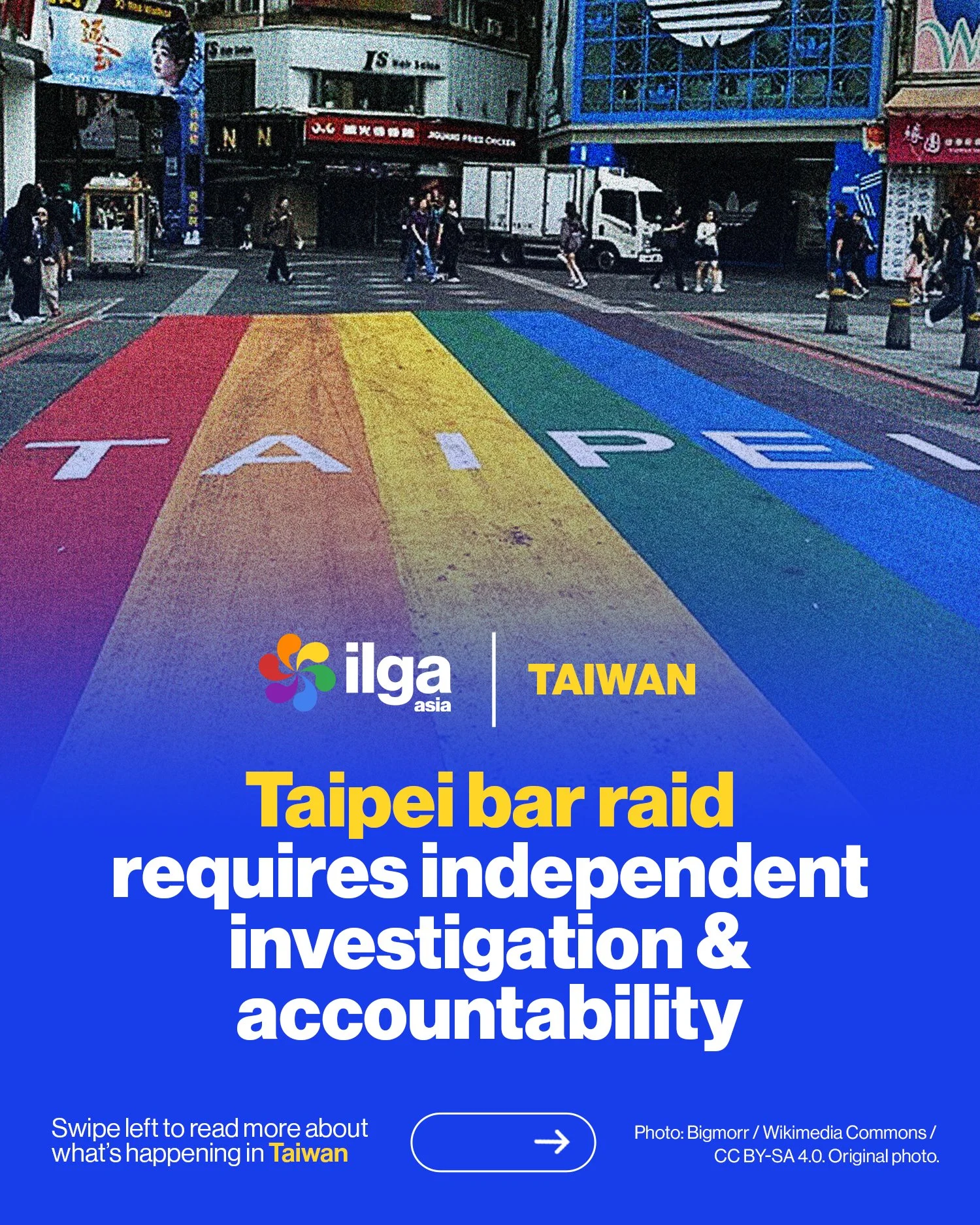
Taiwan: Taipei bar raid requires independent investigation and accountability
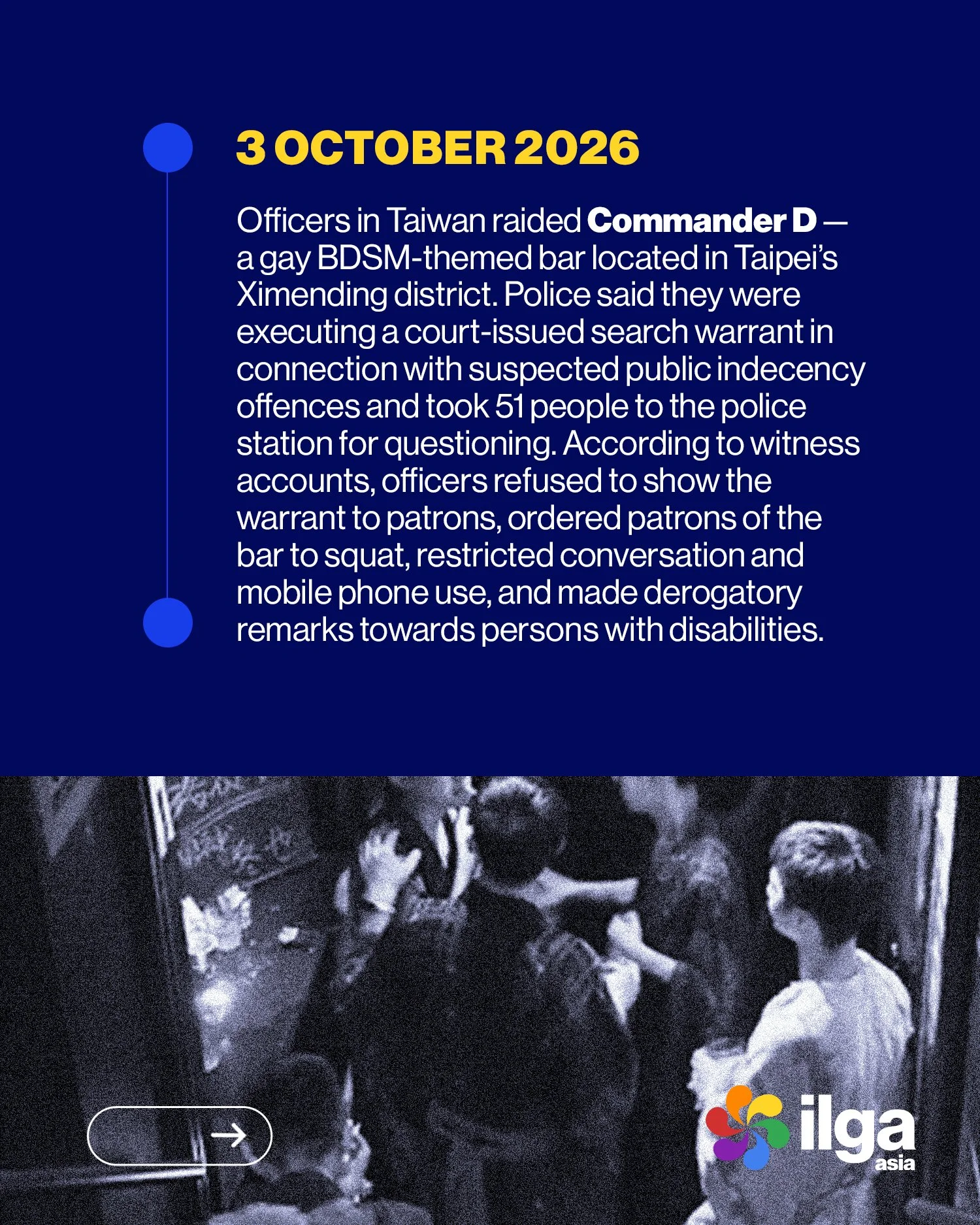
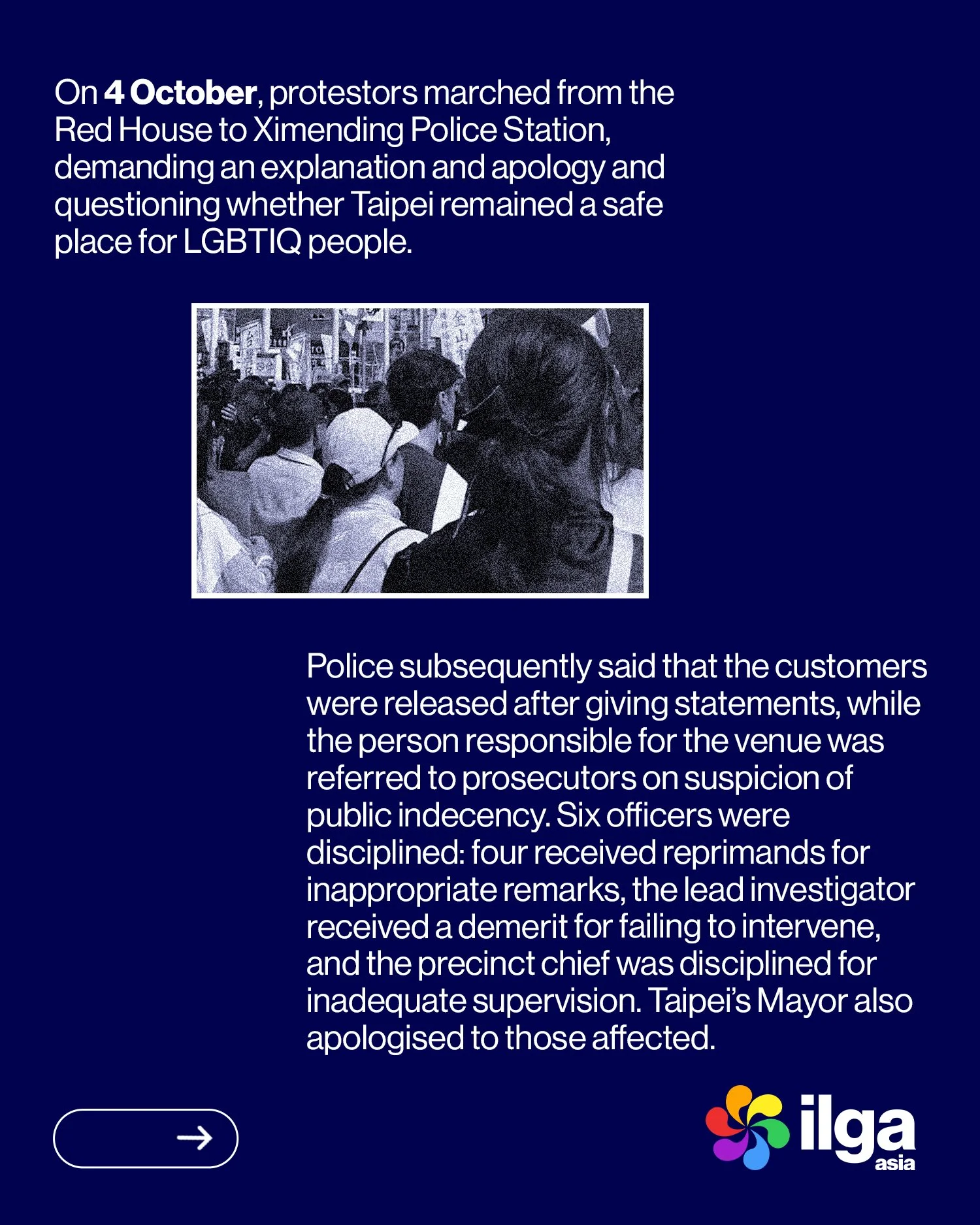
On 3 October 2026, officers in Taiwan raided Commander D — a gay BDSM-themed bar located in Taipei’s Ximending district. Police said they were executing a court-issued search warrant in connection with suspected public indecency offences and took 51 people to the police station for questioning. According to witness accounts, officers refused to show the warrant to patrons, ordered patrons of the bar to squat, restricted conversation and mobile phone use, and made derogatory remarks towards persons with disabilities. On 4 October, protestors marched from the Red House to Ximending Police Station, demanding an explanation and apology and questioning whether Taipei remained a safe place for LGBTIQ people.
Police subsequently said that the customers were released after giving statements, while the person responsible for the venue was referred to prosecutors on suspicion of public indecency. Six officers were disciplined: four received reprimands for inappropriate remarks, the lead investigator received a demerit for failing to intervene, and the precinct chief was disciplined for inadequate supervision. Taipei’s Mayor also apologised to those affected.
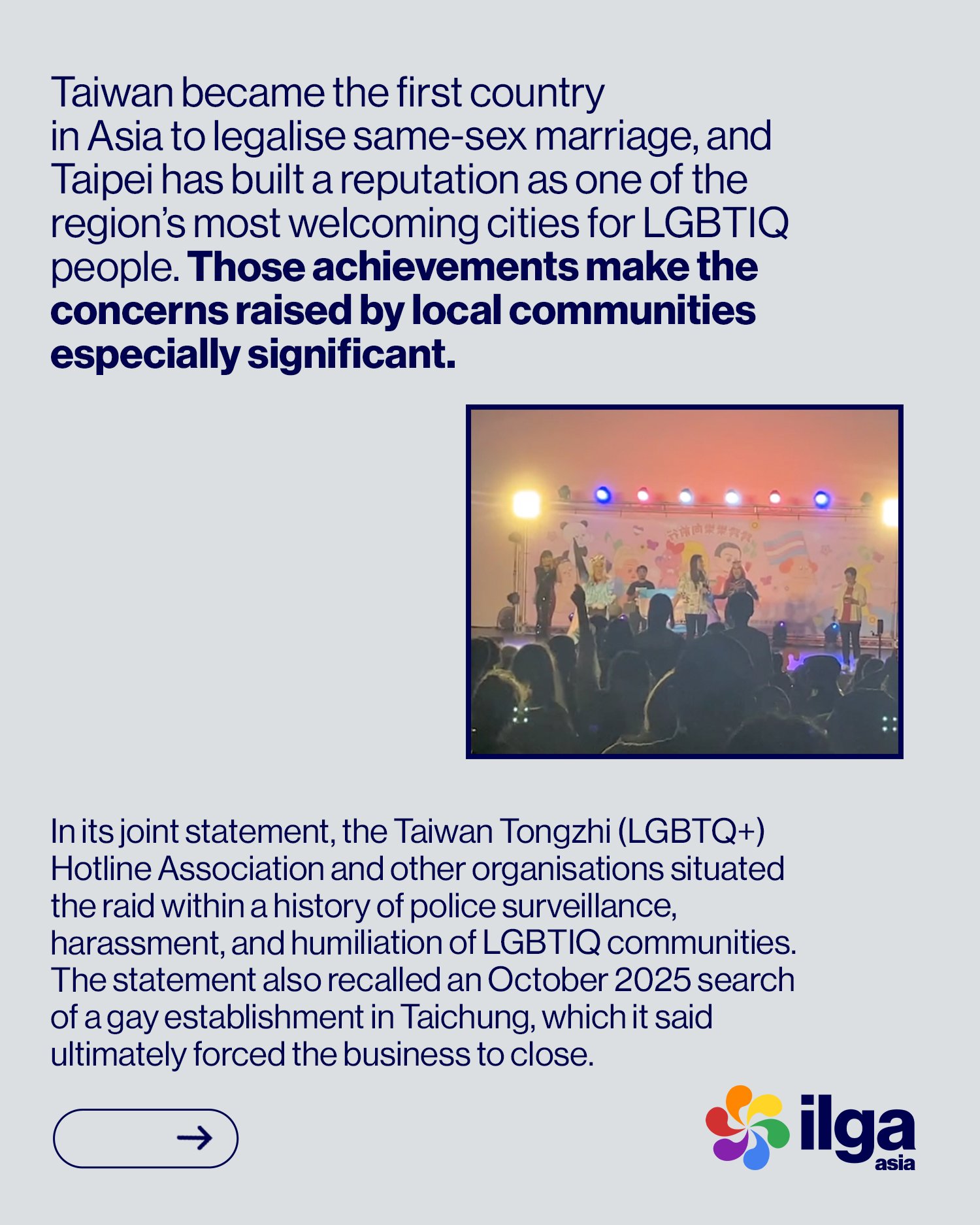
Taiwan became the first country in Asia to legalise same-sex marriage, and Taipei has built a reputation as one of the region’s most welcoming cities for LGBTIQ people. Those achievements make the concerns raised by local communities especially significant. In its joint statement, the Taiwan Tongzhi (LGBTQ+) Hotline Association and other organisations situated the raid within a history of police surveillance, harassment, and humiliation of LGBTIQ communities. The statement also recalled an October 2025 search of a gay establishment in Taichung, which it said ultimately forced the business to close.
”LGBTIQ+ communities should not face higher risks of state surveillance and humiliation just for gathering, socializing, expressing their gender and sexuality, practicing intimacy, or exploring desire. The Taipei City Government must prove through concrete action that the dignity, freedom, and safety of LGBTIQ+ people will never be casually compromised during police operations in a city that claims to be diverse and progressive.” — Sean Sih-Cheng Du, Secretary-General, Taiwan Tongzhi (LGBTQ+) Hotline Association.
“A search warrant does not suspend anyone’s rights. Police must be able to explain why each coercive measure was necessary, and people subjected to abuse must have an effective remedy. Taipei’s commitment to equality will be judged by the accountability it delivers and the safeguards it puts in place for LGBTIQ communities.” — Henry Koh, Executive Director, ILGA Asia.
The reported treatment of patrons raises serious concerns about liberty, dignity, privacy, and equal treatment. A search warrant does not resolve whether the measures used against those present were lawful, necessary, and proportionate. Police have acknowledged inappropriate remarks while maintaining that the operation was lawful, but disputed accounts of coercion and procedural failures require independent scrutiny. The investigation must examine the basis for taking people to the police station, the restrictions imposed on patrons, whether the warrant was adequately presented and explained, and whether discriminatory treatment influenced the conduct of the operation.
Recent raids and crackdowns in several jurisdictions raise concerns about the use of morality and public order laws against LGBTIQ communities. ILGA Asia has documented raids affecting community spaces in Indonesia and Malaysia, while recent reporting from Türkiye describes arrests and restrictions affecting LGBTIQ activists and organisations. The legal settings differ, but discriminatory or arbitrary enforcement threatens the rights to liberty, privacy, equality, and peaceful assembly. It can also undermine the community spaces through which LGBTIQ people find safety. These comparisons reinforce the need to examine the specific conduct and safeguards at issue in Taipei.
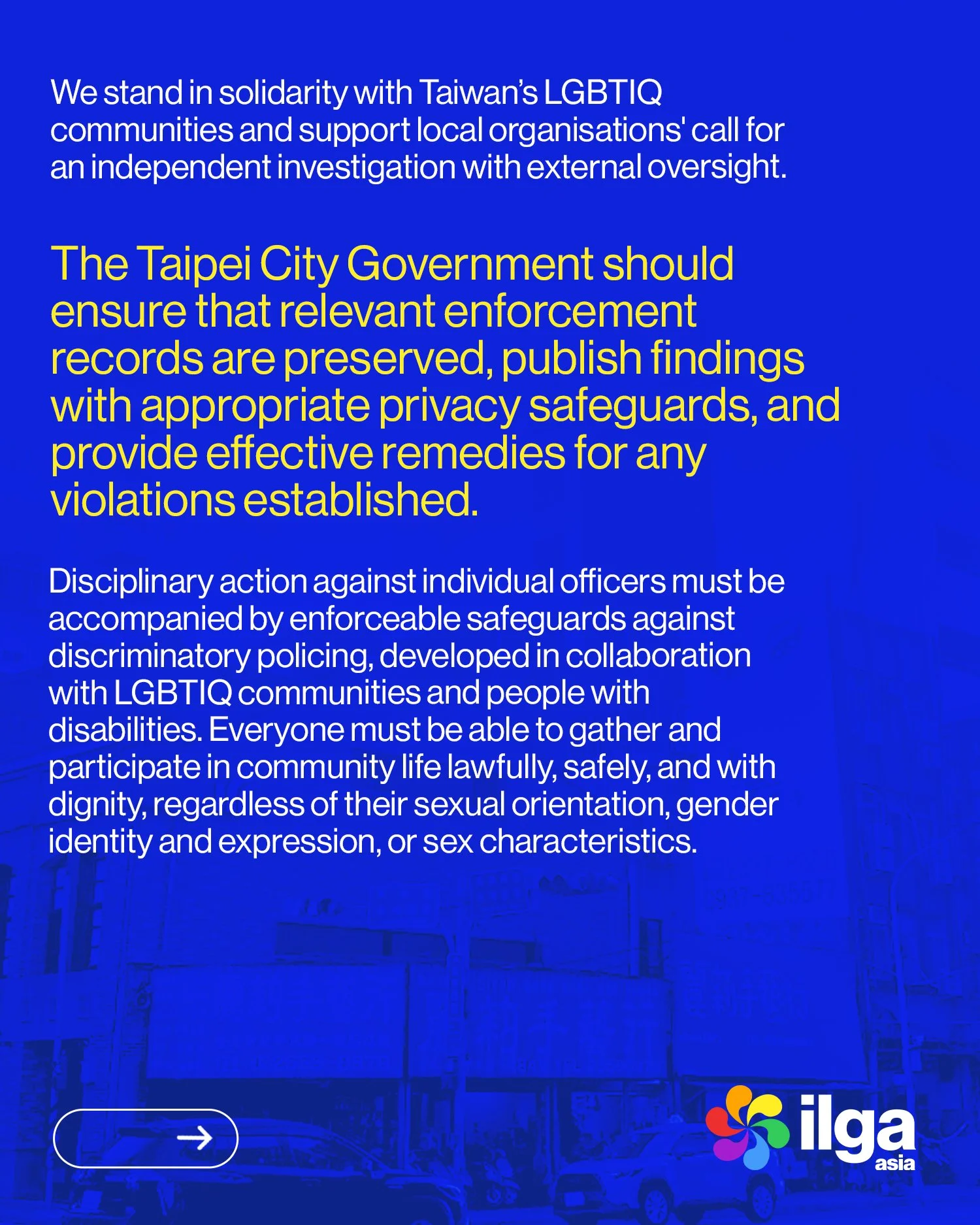
We stand in solidarity with Taiwan’s LGBTIQ communities and support local organisations' call for an independent investigation with external oversight. The Taipei City Government should ensure that relevant enforcement records are preserved, publish findings with appropriate privacy safeguards, and provide effective remedies for any violations established. Disciplinary action against individual officers must be accompanied by enforceable safeguards against discriminatory policing, developed in collaboration with LGBTIQ communities and people with disabilities. Everyone must be able to gather and participate in community life lawfully, safely, and with dignity, regardless of their sexual orientation, gender identity and expression, or sex characteristics.